


There are mornings when the light of Haute-Provence stops you in your tracks. The sky is barely paling, the air carries resin and wild honey, and somewhere twenty minutes down the road, mile upon mile of lavender is waiting — still, violet, almost unreal. For anyone travelling with a camera over one shoulder, this corner of Provence needs no justification. You simply need to know where to look, and at what hour.
Photographing lavender on the Valensole plateau: what to know before you set off
The Valensole plateau is one of the largest expanses of cultivated lavender in Europe. From Domaine Ribiera, you can reach it in barely twenty minutes — a short drive that opens onto something remarkably generous. In July, when the bloom reaches its peak, the rows unfurl seemingly without end, interrupted here and there by an old oak or a stone sheepfold. It is precisely that contrast, between the geometry of the furrows and the roughness of the landscape, that makes the plateau such rewarding ground for a photographer.
The flowering season generally runs from mid-June to the end of July, with variations from year to year and according to altitude. It is worth asking locally before fixing the dates of your stay: the fields change quickly, and a single week can alter everything. From Niozelles, you enjoy an ideal position — neither too far north, nor too far south — to adjust your itinerary in real time as the blooms progress.
As for equipment, a tripod remains your finest ally during the golden hours. Bring a wide-angle lens to capture the sweep of the rows, but do not leave the moderate telephoto behind: it compresses the leading lines and isolates the details — a bee on a stem, the silhouette of a farmhouse in the distance, the violet gradient rising towards the sky.
The best time to photograph lavender near Forcalquier: light and timing
It is often said, and it happens to be true: the light of Provence resembles no other. But it does not give itself away to just anyone. The golden hour of morning — the forty minutes or so after sunrise — bathes the fields in a warm, almost amber tone that plays against the cool violet of the lavender. Shadows stretch long, the rows are sculpted. This is the moment experienced photographers prefer, and it more than justifies an early alarm.
Sunset offers a different light, softer, tinted with orange and rose. The fields take on a new depth, the colours seem to catch fire before fading altogether. From certain points on the plateau you can make out the profile of the Luberon in the background, which adds another dimension to the composition. More often than not, it is at this hour that an image becomes genuinely memorable.
Avoid the midday light where you can: hard and vertical, it flattens the relief and saturates the colours without doing them any favours. Use those quieter hours instead to explore the surrounding villages, scout your angles for the next session, or grant yourself a well-earned pause on the terrace of the Le Ribiera restaurant before heading out again in late afternoon.
Composing a fine image in the lavender fields of Provence
Lavender is generous, but it is also repetitive. Rows as far as the eye can see are a beautiful sight — and yet, without a point of interest, the image can quickly become merely pleasant. Look for whatever breaks the rhythm: a lone almond tree in the middle of a field, a dirt track slipping in between the rows, an old wooden crate abandoned at the edge of a plot. These small accidents of the real world are what give a photograph its character.
Leading lines are your greatest ally on the Valensole plateau. Position yourself at the end of a row, close to the ground if your camera allows, and let the stems guide the eye all the way to the horizon. Then vary your shooting height: high up to convey the sheer scale, low down to convey the density. Combined, these two approaches tell two different stories about the same place.
Do not overlook the details either: a cluster of flowers in close-up, a beekeeper's hands, a butterfly settled on a stem. Such images round out a series beautifully and lend it a narrative texture that wide views alone cannot provide.
Photographing lavender from the Luberon: routes starting from Domaine Ribiera
Domaine Ribiera stands in Niozelles, five minutes from Forcalquier and at the gateway to the Luberon Regional Nature Park. This geography offers photography enthusiasts a remarkable range of itineraries. To the south, the roads that thread through the Luberon cross shifting landscapes — holm oaks, ochre earth, dry-stone terraces — before opening onto wide, uninterrupted viewpoints.
To the east, the Valensole plateau reveals itself gradually as you leave the woodland behind. You might combine, in a single day, a morning session on the plateau, a lunch stop in a hilltop village, then a late-afternoon session on the heights overlooking the fields — all without ever straying more than an hour from the estate. That is one of the great pleasures of this region: such variety of landscape within so tight a radius.
For those keen to explore further, the Verdon Gorges lie forty-five minutes away. The road there passes through lavender country in its own right and offers stops well worth making, long before you reach the canyon itself.
Planning your photography stay from Domaine Ribiera
Setting off at dawn, returning with full memory cards, and finding somewhere to set down your gear and unwind gently — that, in essence, is what Domaine Ribiera offers quite naturally. The rooms and suites, conceived as spaces for genuine rest, let you recover between sessions without losing the thread of the experience. The spa, with its heated indoor pool, hammam and sauna, provides exactly the transition the body asks for after long hours in the open air.
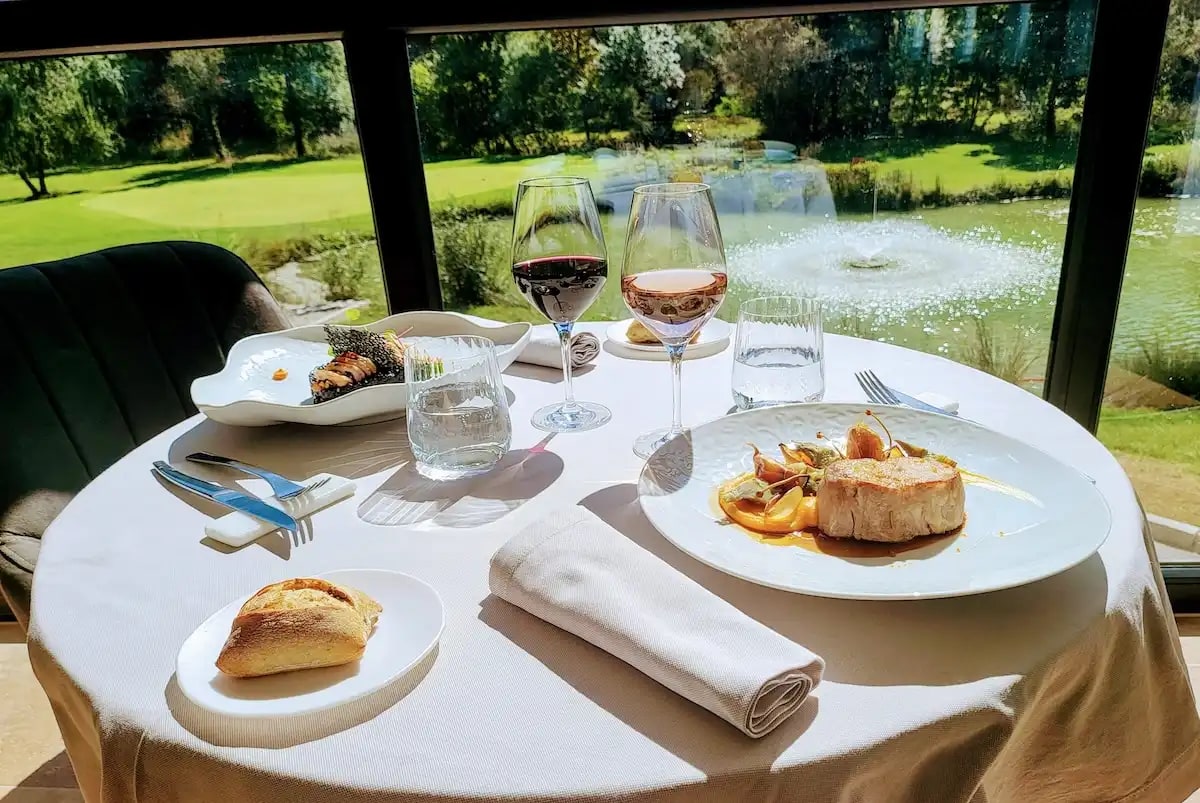
In the evening, the terrace of the Le Ribiera restaurant takes over. One lingers willingly, looking out over the golf course and the hillside, around a gastronomic cuisine that celebrates the produce of the region. It is often there, in that end-of-day light, that you realise the finest images are not always the ones you took out in the fields.
To arrange your photography stay in Haute-Provence and see our availability, we invite you to visit our website: www.ribiera.fr. The team at Domaine Ribiera will be delighted to point you towards the season's finest spots, according to when you plan to join us.
Lavender is not really photographed. It is met — and the rest follows.